 Taganga
Before your first dive it's normal to wonder what each part of the scuba diving gearis for. In this beginner's guide we explain each piece, how to use it and what to check before getting in the water. Spoiler: on our courses all the gear is included.
Basic scuba gear, piece by piece
Mask
Creates an air space in front of your eyes so you can see clearly underwater. It should seal well without squeezing. To keep it from fogging, it's cleaned before use.
Fins
They multiply the power of your legs and let you move with little effort. The correct kick is slow and from the hip.
Wetsuit
Protects you from the sun and scrapes and keeps your body warm. In the warm Caribbean, thin wetsuits are used.
Buoyancy control device (BCD)
Holds the tank and is inflated or deflated to control whether you go up, down or stay at a depth. Mastering buoyancy is one of the most important skills in diving.
Regulator
Turns the tank's pressurized air into air you can breathe. It has a second air source (octopus) to share with your buddy if needed.
Tank or cylinder
Holds the compressed air you breathe during the dive.
Pressure gauge and dive computer
The pressure gauge shows how much air you have left. The dive computer measures depth and time and helps you dive within safe limits.
Weights
Weights that offset the natural buoyancy of your body and wetsuit so you can descend.
The pre-dive check
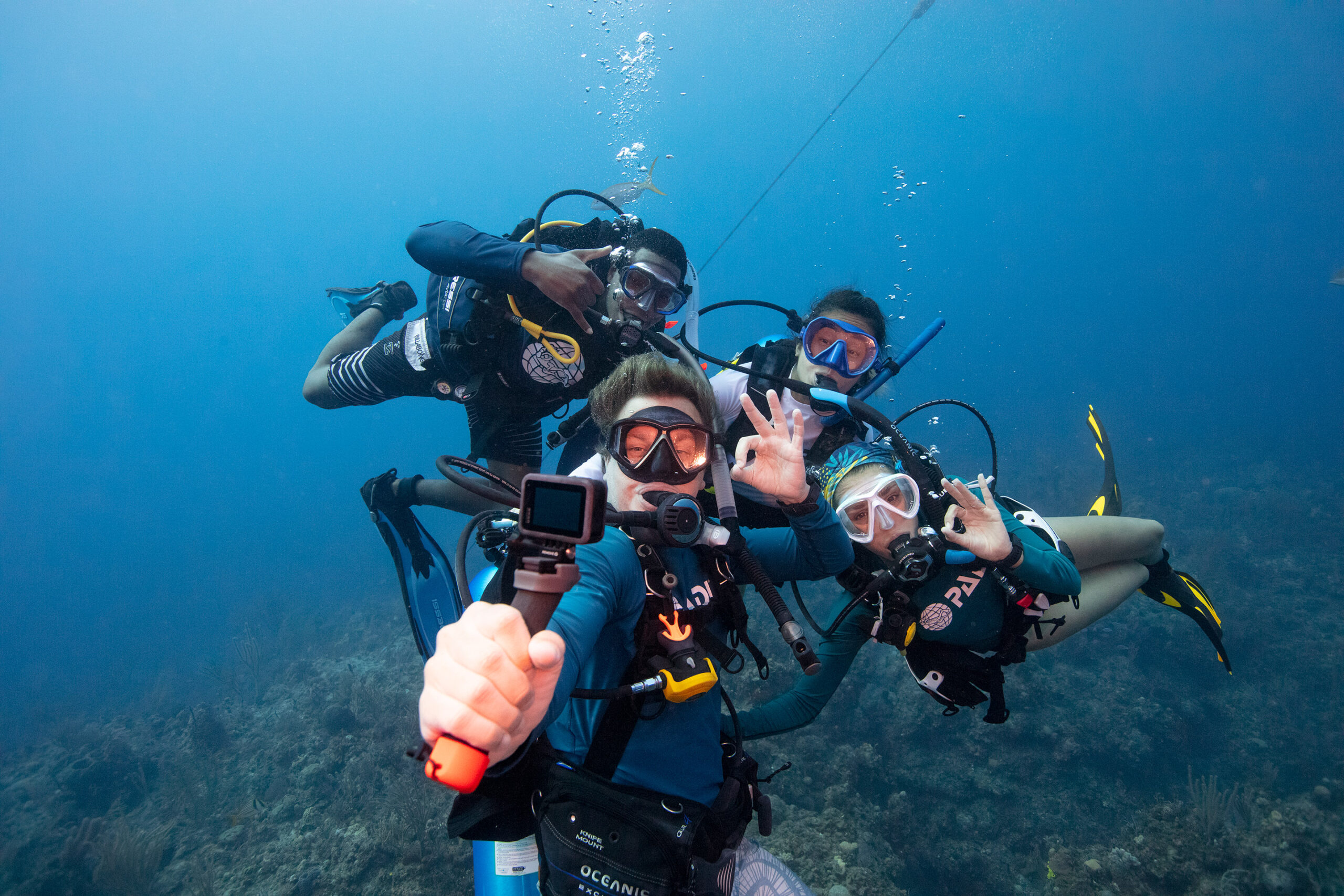
Every diver checks their gear and their buddy's before each dive:
- BCD: inflates and deflates properly.
- Weights: securely in place and releasable.
- Buckles and straps: everything tight and in place.
- Air: the tank is open and you breathe well through the regulator.
- Final OK: you check your buddy and give each other the OK sign.
Buy or rent scuba gear?
If you're starting out, it's best to use the school's gear: it's already fitted, checked and maintained. Over time, many divers first buy the most personal items: mask, fins and computer. At Taganga Dive Station the gear is modern and in perfect condition:
“The equipment is all new and in perfect condition. He even took photos and videos of our dives and shared them for free.” — Folger Fonseca, Google review
Book online
You don't need to buy anything
All our courses include full gear and a dive computer. Start with the Try Scuba Mini-Course.
Tips for caring for your gear
- Rinse it with fresh water after each use.
- Dry it in the shade, never in direct sun.
- Don't leave the regulator hanging from the tank or bang it.
- Have the regulator and BCD serviced by a technician regularly.
Want to learn it all hands-on? The PADI Open Water Diver Course teaches you to assemble, use and take apart your gear. And if it's your first time, read what diving for the first time in Santa Marta is like.
Also, to go deeper into gear use and care, check the resources of PADI.
Frequently asked questions about scuba gear
Do I need to bring my own scuba gear?
No. At Taganga Dive Station all courses include full gear: BCD, regulator, wetsuit, mask, fins, tank and dive computer.
Which scuba gear should I buy first?
The most personal items: a mask that fits you well, fins and, later on, a dive computer.
What is a dive computer for?
It measures the depth and time of the dive and helps you dive within safe limits.


